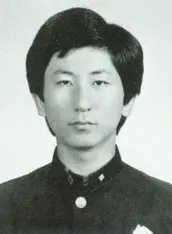
For over 30 years, the Hwaseong region of South Korea lived in fear as a predator stalked its quiet rural towns, leaving behind panic, grief, and unanswered questions. It would take more than three decades, a massive police investigation, and a breakthrough in forensic science before the nation learned the name of the man responsible: Lee Chun-Jae.
Today, he is recognized as one of the most notorious serial killers in South Korean history. However, for years, he remained a ghost—an identity that no one could connect to the horrors he committed.
Early Life: A Quiet Beginning with a Dark Turn
Lee Chun-Jae was born on January 31, 1963, in Hwaseong. His childhood was largely ordinary, though marked by the tragic death of his younger brother and early signs of behavioral issues. After high school, he served in the South Korean military until his discharge in January 1986. In 1992, he married and attempted what appeared to be a “normal” life.
However, behind closed doors, the illusion of normalcy began to crumble. Lee’s marriage was troubled, characterized by violent tendencies that suggested something much darker beneath the surface.
The Hwaseong Murders Begin (1986-1991)
Between 1986 and 1991, Hwaseong became the center of a series of horrific crimes. Women of all ages, from teenagers to the elderly, were bound, assaulted, and strangled—often with their own clothing as ligatures.
The repeated pattern made one thing clear: a serial predator was operating in the area. The police launched one of the most extensive investigations in the nation’s history, interviewing tens of thousands of people. Despite these extensive efforts, the killer could not be identified, leaving the community in a state of fear.
Below is a list of known victims linked to Lee Chun-Jae, including those he later confessed to. Ages range widely, showing his lack of a consistent victim profile.
| Victim | Age | Date of Crime | Date of Discovery | Location |
|---|---|---|---|---|
| Lee Wan-Im | 71 | Sept 15, 1986 | Sept 19, 1986 | Taean-eup (now Hwaseong), Annyeong-ri |
| Park Hyun-Sook | 25 | Oct 20, 1986 | Oct 23, 1986 | Taean-eup, Jinan-ri |
| Kwon Jung-Bon | 25 | Dec 12, 1986 | Apr 23, 1987 | Taean-eup, Annyeong-ri |
| Lee Kye-Sook | 23 | Dec 14, 1986 | Dec 21, 1986 | Jeongnam-myeon, Gwanhang-ri |
| Hong Jin-Young | 19 | Jan 10, 1987 | Jan 11, 1987 | Taean-eup, Hwanggye-ri |
| Park Eun-Joo | 29 | May 2, 1987 | May 9, 1987 | Taean-eup, Jinan-ri |
| Ahn Gi-Soon | 54 | Sept 7, 1987 | Sept 8, 1987 | Paltan-myeon, Gajae-ri |
| Park Sang-Hee | 14 | Sept 16, 1988 | Sept 16, 1988 | Taean-eup, Jinan-ri |
| Kim Mi-Jung | 14 | Nov 15, 1990 | Nov 16, 1990 | Taean-eup, Byeongjeom-dong |
| Kwon Soon-Sang | 69 | Apr 3, 1991 | Apr 4, 1991 | Dongtan-myeon, Bansong-ri |
Other victims include Kim Mi-Soon (18), Kim Hyun-Jung (8), Park Mi-Hwa (17), Kim Hong-Bun (27), and Lee’s sister-in-law (18). The ages of the victims varied significantly, indicating the absence of a consistent victim profile.
A Crime That Finally Exposed a Monster
Despite a massive investigation, the Hwaseong killer remained at large—until 1994. On January 13 of that year, Lee drugged, raped, and murdered his 18-year-old sister-in-law after his wife left him the previous month. He was arrested, convicted, and sentenced to life in prison with the possibility of parole after 20 years. At the time, no one realized that the man behind bars had been the source of terror in Hwaseong for years.
Wrongful Conviction: The Case of Yoon Sung-Yeo
In 1989, a young man named Yoon Sung-Yeo was arrested for the murder of 14-year-old Park Sang-Hee. Under intense interrogation, he confessed to the crime, but later claimed that his confession was coerced through abuse. Yoon spent nearly 20 years in prison before a confession from another individual, Lee, in 2019 revealed the truth about the case.
On December 17, 2020, Yoon was officially acquitted, and in March 2021, the state ordered compensation of roughly KRW 2.5 billion (USD 2.2 million). His case highlights the human cost of flawed investigations and the dangers of a system under pressure.

DNA Breakthrough and Confession
In 2019, advancements in DNA testing allowed investigators to revisit cold cases. Biological evidence from a Hwaseong victim matched Lee Chun-Jae. When questioned, he confessed to 14 additional murders, including the 10 Hwaseong killings, as well as multiple unsolved assaults.
Unfortunately, due to the expiration of the statute of limitations, Lee could not be legally convicted for these murders. He remains in prison today, serving a life sentence for the murder of his sister-in-law, while the Hwaseong victims’ families continue to grapple with incomplete justice.
The Aftermath: A Legacy That Changed a Nation
Lee Chun-Jae’s case had a significant impact on South Korea:
- Law Enforcement Reforms: The case revealed serious flaws in police methods, such as coerced confessions and wrongful arrests.
- Change to Statute of Limitations: Public outrage led to the abolition of the statute of limitations for murder.
- Enduring Impact: For the families of victims, answers came too late to provide complete closure, underscoring the lasting effects of unresolved crimes.
Final Thoughts
The story of Lee Chun-Jae is haunting, not just because of the crimes he committed, but also because of the insights it offers into society, justice, and human vulnerability. His case serves as a stark reminder that evil can lurk behind ordinary appearances, that the consequences of investigative failures can be real and lasting, and that the pursuit of truth—even decades later—remains essential.
The Hwaseong murders have left scars that time cannot fully erase. However, they have also prompted reforms, reflections, and a commitment to ensuring that silence is never mistaken for safety again.
References
Mole, C. (Director). (2021). Catching a Killer: The Hwaseong Murders [Documentary]. KBS Media. https://www.imdb.com/title/tt15674424/
Park. S. H. (2020). Hwaseong serial murders: Rattling debate on the statute of limitations. Hanyangian News. https://www.hanyangian.com/news/articleView.html?idxno=962
Kim, S. Y. (2021). The Chaser, South Korean serial killer cinema and the crisis of masculinity. Screen, 62(1), 20–36. https://doi.org/10.1093/screen/hjab005
Yoon, M. S. (2023). Hwaseong murders: Korea’s most infamous cold case. https://www.koreaherald.com/article/3162492
Leave a Reply