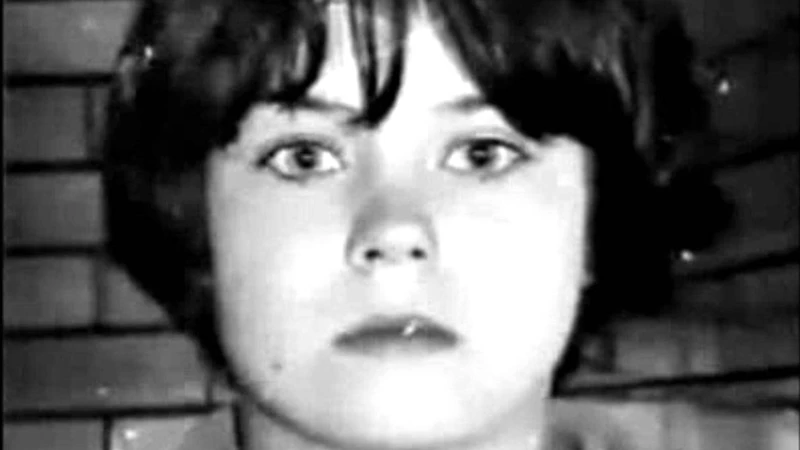
In the summer of 1968, the quiet streets of Scotswood—a working-class neighborhood in Newcastle upon Tyne—were shaken by a series of tragedies that no one could have imagined. The culprit wasn’t a hardened criminal or a shadowy figure lurking in the night; it was a child. Eleven-year-old Mary Bell became one of Britain’s most infamous offenders, her name forever tethered to a case that still unnerves criminologists and the public alike.
A Childhood Marked by Trauma
Mary Bell was born on May 26, 1957, in Newcastle upon Tyne, England. Her early life was defined by neglect, physical abuse, and possible sexual abuse. Her mother, Betty Bell, struggled with mental health issues and substance abuse and worked as a sex worker. Their home was chaotic—filled with constant arguments, unpredictable outbursts, and an absence of emotional safety. Mary’s biological father was never definitively identified, only adding to the uncertainty surrounding her early life. Neighbors recalled shouting, tension, and unexplained injuries that raised suspicions long before the truth emerged.
Over time, these incidents stopped looking like bad luck and began to resemble a pattern that no one around her quite knew how—or perhaps dared—to confront.
Physical and Emotional Abuse
Mary’s life was a patchwork of fear and instability. She later recounted that her mother could shift rapidly from affection to violence. As an adult, Mary claimed she was shoved, hit, and even suffocated. Relatives and neighbors suspected abuse, often noticing bruises and “accidents” that occurred far too frequently to dismiss.
Sexual Abuse
One of the most disturbing elements of Mary’s early life involves allegations of sexual abuse beginning when she was very young. According to Mary’s later accounts, she was exposed to sexual exploitation by men her mother associated with. The full extent is still debated—partly because no formal documentation existed—but Mary consistently maintained that the experiences were real and deeply damaging.
Experts have widely cited this early exposure to trauma as a factor in her emotional detachment, impulsivity, and her abnormal responses to distress in others. It contributed to a childhood lived without safety, stability, or appropriate boundaries.
School and Behavior with Peers
Mary’s school performance was inconsistent. Teachers noted she was intelligent but frequently inattentive and disruptive. Her school life was punctuated by mood swings, defiance, and difficulty adjusting to structure.
Forming friendships was equally challenging. Some classmates remembered her as domineering or unpredictable, at times showing aggression toward other children. Other times, she seemed isolated, hovering at the edges of social groups rather than participating.
Adults described her as emotionally detached and socially out of sync. Her emotional responses were often muted or oddly timed, and she could move quickly from seeking attention to pushing others away. These difficulties with peers and her erratic conduct in school were later seen as early indicators of the more profound instability present in her home life.
The Murders
Mary Bell’s crimes shocked the United Kingdom not only for their brutality but also because she was only ten and eleven at the time.
The First Victim: Martin Brown
On May 25, 1968, four-year-old Martin Brown disappeared. His body was found in an abandoned house. Initially, authorities believed the death was accidental. Only later did investigators begin to suspect asphyxiation, but the exact cause of Martin’s death remained unclear. Her reactions in the aftermath suggested a level of awareness and intent unusual for a child of her age.
Mary’s behavior afterward raised red flags—she spoke about the death with unsettling enthusiasm and told classmates she had “killed a boy.” Shortly after, a nearby nursery was vandalized and notes claiming responsibility for Martin’s death—notes the authorities initially dismissed as a prank.
The Second Victim: Brian Howe
On July 31, 1968, Mary struck again. Three-year-old Brian Howe was found dead in a grassy area between two houses. This time, it was immediately clear that the death was intentional.
Brian had been strangled, and his body showed signs of pre- and post-mortem injuries, including stab wounds, patches of cut hair, genital mutilation, and what appeared to be an “M” carved into his stomach.
The lack of brute force and the small size of the marks led investigators to suspect a child. During questioning, Mary revealed details only the killer could know. She made comments that suggested she wanted to understand what it felt like to end a life.
Investigation and Arrest
Police soon realized the killer was likely a child, given the victims, the locations, and the nature of the injuries. Mary became a primary suspect when she displayed knowledge of undisclosed details.
Psychologists involved in the investigation noted traits associated with antisocial behavior: lack of remorse, manipulativeness, and a disturbing fascination with death. To some clinicians, it seemed Mary understood the mechanics of death far more—and felt it far less—than any child should.
The Trial
Mary’s trial began in December 1968. Because she was under fourteen, she could not be tried as an adult; however, she was convicted of manslaughter on the grounds of diminished responsibility. Her sentence—indefinite detention at “Her Majesty’s pleasure”—reflected the seriousness of the crimes and the uncertainty surrounding her psychological state.
The case was one of the first in the UK to focus heavily on the inner world of a child offender, sparking national debate about juvenile crime, trauma, and criminal responsibility.
Psychological Insights
Experts widely agree that Mary’s actions were profoundly shaped by early trauma and neglect. Her case remains a staple in criminology and child psychology, illustrating how chaotic environments can distort emotional development.
Severe Childhood Abuse and Neglect
Mary endured chronic physical abuse, emotional cruelty, exposure to violence, possible sexual exploitation, and neglect. Her mother’s erratic behavior and alleged involvement in prostitution often placed Mary in unsafe, adult environments.
Such trauma can disrupt attachment, empathy, and the ability to regulate emotions. When a child is treated as an object, they may begin viewing others the same way.
Attachment Disorder and Emotional Dysregulation
Mary showed behaviors consistent with attachment disorders, including:
- Low frustration tolerance
- Difficulty forming relationships
- Emotional detachment
- Rapid mood shifts
These patterns align with reactive or disorganized attachment—conditions that can develop when caregivers are neglectful, frightening, or abusive.
Dissociation and Fantasy as Survival
Psychologists noted that Mary occasionally retreated into fantasy or dissociative states—common coping strategies in abused children. Behaviors included:
- Flat affect during stressful events
- Blurred lines between storytelling and reality
- Minimizing frightening experiences
- Unusual calmness after distressing incidents
Over time, this emotional numbing can distort a child’s ability to understand consequences, empathy, or the gravity of violent actions. What may look like coldness is actually a shield built for survival.
Distorted Moral Development
Mary’s unstable environment disrupted her moral development. Children learn right from wrong through consistent caregiving and predictable rules. Mary experienced none of that.
Signs of impaired moral development that experts later highlighted include:
- Difficulty distinguishing play from harm
- Limited understanding of irreversible consequences
- Inappropriate detachment after violence
- Inconsistent expressions of remorse
This inconsistency is common in children who are not given stable moral frameworks. Their understanding of right and wrong may shift based on fear, confusion, or learned manipulation rather than genuine empathy.
Learned Aggression and Normalization of Violence
When a child repeatedly witnesses or experiences violence, the brain adapts to view aggression as expected, and in some cases, as a survival tool. In Mary’s case, this likely contributed to:
- Impulsive use of aggression
- Mimicking behaviors seen in adults
- Misinterpreting interpersonal dynamics
- Viewing harm as expected rather than shocking
Criminologists frequently point out that when children see violence treated casually or used to resolve conflict, they may incorporate those patterns into their own behavior—especially if they lack positive role models.
Psychopathic Traits vs. Trauma Responses
Although Mary displayed traits sometimes associated with psychopathy—superficial charm, manipulation, shallow affect—many experts caution against diagnosing children with psychopathy, especially those who have suffered extensive trauma.
Behaviors that appear “cold” or “calculating” may instead reflect survival mechanisms:
emotional numbing, chronic fear, or underdeveloped empathy. Mary’s actions were shaped by years of trauma. Could a child survive that and act differently?
Control, Power, and Identity
Some researchers argue that Mary’s violence was, in part, an attempt to regain control in a life defined by powerlessness. Indicators include:
- Dominance over younger children
- Acting out when ignored
- Experimenting with authority as self-definition
For a child who has been treated as an object, inflicting control—however distorted—can feel like reclaiming agency.
Release, Anonymity, and a Life Lived in Shadows

Mary served 12 years and was released in 1980 at age 23. She was granted lifelong anonymity to protect her—and later her daughter’s—privacy. Her current identity and location remain undisclosed.
A Case That Continues to Challenge Us
The Mary Bell case forces society to confront difficult questions:
- What happens when a child becomes a killer?
- How much responsibility can a traumatized child bear?
- How many opportunities for intervention were missed?
- What does justice look like when the perpetrator is also a victim?
Mary’s story is a tragic, unsettling reminder that some criminals are shaped by harms inflicted long before they commit harm themselves.
Leave a Reply