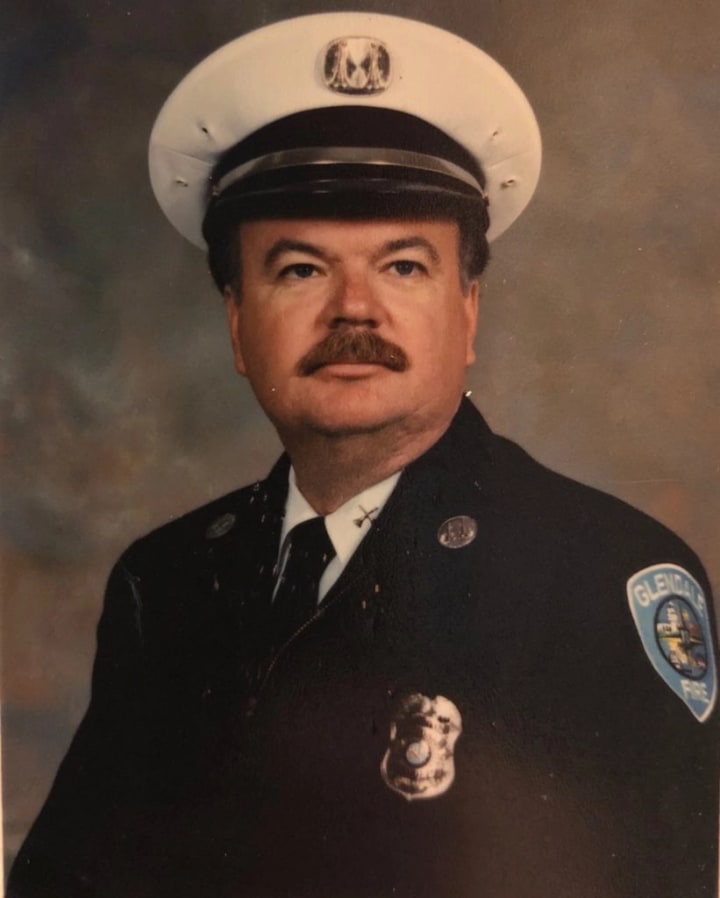
True crime experts frequently cite Orr’s case when examining criminal psychology—particularly fire-setting behavior. Unlike many arsonists driven by financial gain or revenge, Orr’s motivations seemed rooted in compulsion and control, a need for narcissistic validation, thrill-seeking behavior, and emotional detachment.
A Dual Life Driven by Narcissism
At the core of Orr’s psychology was a profound need for admiration and superiority. Narcissistic individuals often seek environments that validate their intelligence, expertise, and perceived importance. For Orr, the fire service offered the perfect stage.
But his narcissism extended far beyond typical self-importance. He wanted to be the mastermind and the hero.
By setting fires and then arriving to “solve” them, he positioned himself as:
- The first person on the scene
- The most insightful investigator
- The expert who could decode patterns no one else recognized
This dual-role fantasy—being both the criminal and the hero—generated a powerful psychological reward. He didn’t just want recognition; he wanted to be indispensable.
Compulsive Fire-Setting: A High-Risk Behavioral Addiction
While many arsonists are motivated by revenge, financial gain, or political extremism, Orr fits the pattern of a compulsive, thrill-driven fire setter, sometimes called a “pathological firebug.”
Key characteristics include:
1. Arousal and Adrenaline Behind the Flames
Fire stimulates a physiological thrill response. In Orr’s case, the emotional reward spiraled into a behavioral addiction. He displayed classic signs: taking greater risks, setting fires more frequently, increasing their severity, and showing indifference to the consequences.
2. A Sense of Control Through Destruction
Fire is unpredictable, destructive, and powerful. For some individuals, that power becomes intoxicating. Orr used fire to manipulate environments, dictate emergency responses, and assert dominance over chaos.
The “Hero Arsonist” Pathology
One of the most disturbing aspects of Orr’s psychology is his alignment with the hero arsonist, a rare but documented profile in criminology. Individuals in this category create crises to display heroism, engineer danger to resolve it later, and seek validation through manufactured emergency scenarios.
In Orr’s case, the “hero” aspect was focused less on extinguishing flames and more on outsmarting colleagues as an investigator. His fires were puzzles only he knew the answers to—giving him intellectual and psychological satisfaction.
Manipulation and Deception as Core Traits
Orr concealed his crimes for years, which required:
- Careful planning
- Detailed knowledge of fire investigation procedures
- A capacity for sustained deceit
- A high degree of confidence in his own intelligence
These qualities point toward psychopathic tendencies, though not necessarily full psychopathy. Many experts argue that he displayed grandiosity, shallow affect, a lack of empathy, chronic manipulation, a need for stimulation, and remorselessness.
His indifference to the deaths caused by his fires—even the death of a toddler and a young mother—is chilling and strongly supports this interpretation.
Detachment and Emotional Coldness
Unlike impulsive or rage-driven offenders, Orr’s crimes were methodical. His ability to set fires, return to work, and calmly analyze the aftermath reflects the absence of guilt, emotional detachment, and a compartmentalized psyche.
He could separate his professional identity from his violent compulsions, allowing him to maintain a facade of normalcy.
The Fictional Manuscript: A Window Into His Mind
One of the most revealing psychological artifacts is Orr’s manuscript Points of Origin, which investigators described as an almost autobiographical confession. In it, he wrote about a fire-setting protagonist in obsessive, self-characterizing detail.
The manuscript demonstrated:
- A Glamorization of His Crimes
The arsonist character was portrayed as brilliant, misunderstood, and powerful. - A Need to Transform Crime Into Art
This aligns with offenders who feel their crimes elevate them above ordinary people. - A Lack of Remorse
The fictionalized account mirrored real tragedies—including fatal ones—without emotional conflict.
To forensic psychologists, this manuscript is one of the most transparent windows into his internal justification system: he believed he was smarter than the law and entitled to recognition, even if destruction was the price.
Escalation and the Loss of Internal Restraint
Over time, Orr’s fires grew bigger, more dangerous, and increasingly unpredictable.
This reflects a common pattern among compulsive offenders: tolerance and escalation. The psychological high diminished, requiring bolder acts to achieve the same effect. This escalation is why serial arsonists often become increasingly reckless—and why Orr eventually made mistakes that revealed his identity.
A Predator Hiding Behind a Badge
Perhaps the most disturbing aspect of Orr’s psychology is the way he exploited his position of authority:
- He used professional knowledge to perfect his crimes
- He used his uniform to avoid suspicion
- He shaped investigations that targeted innocent individuals
This suggests not only narcissism, but a deliberate desire to manipulate and dominate both the fire service and the public.
He didn’t simply commit crimes.
He controlled the narrative.
Final Assessment: A Dangerous Blend of Intelligence and Compulsion
Psychologists often describe Orr as a rare, dangerous combination of:
- High cognitive ability
- Manipulative tendencies
- Emotional detachment
- Compulsive thrill-seeking
- A grandiose self-image
Individually, any of these traits can create problems. Combined, they produced a serial arsonist whose crimes shocked investigators and devastated communities.
He remains one of the most studied cases in fire psychology, not just for what he did, but for how perfectly he hid in plain sight.
Orr’s case endures because it forces an uncomfortable truth: intelligence and authority do not prevent monstrosity—they can sometimes enable it.
References
Babiak, P., & Hare, R. D. (2007). Snakes in suits: When psychopaths go to work. HarperCollins.
Doley, R. M., Dickens, G., & Gannon, T. (2016). The psychology of arson: A practical guide to understanding and managing deliberate firesetters. Routledge.
Douglas, J. E., & Olshaker, M. (2000). The Anatomy of Motive. Pocket Books.
Hare, R. D. (1999). Without conscience: The disturbing world of the psychopaths among us. Guilford Press.
United States of America, Plaintiff-appellant, v. John Leonard Orr, Defendant-appellee, 977 F.2d 593 (9th Cir. 1992) (U.S. Court of Appeals for the Ninth Circuit – 977 F.2d 593 1992).
Leave a Reply