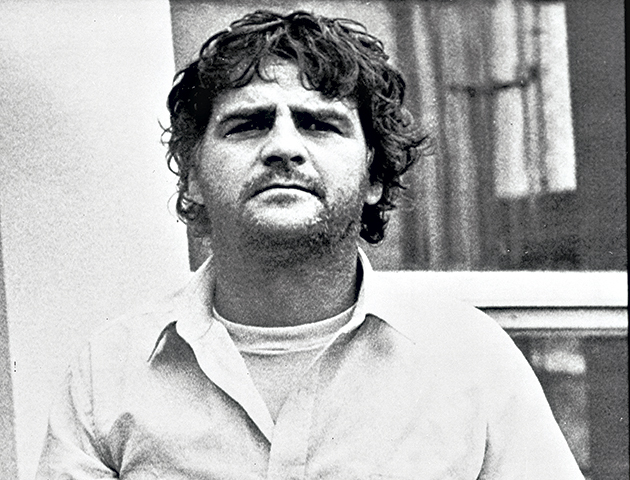
Some cases endure not only because of the brutality of the crimes but also because of the profound failures that allowed them to happen. The case of Clifford Olson remains one of the darkest chapters in Canadian criminal history—a case defined by predation, manipulation, and institutional neglect that cost eleven children their lives.
Who Was Clifford Olson?
Clifford Olson was born in 1940 in British Columbia. Long before his name became synonymous with horror, Olson was already embedded in the criminal justice system. During his school years, Olson was known as a bully and petty criminal, frequently involved in fights and theft. After finishing 8th grade, Olson dropped out of school. He continued to live at home with his parents until he was 17 years old, when he went to jail for breaking and entering.
Over the next 25 years, Olson spent much of his life incarcerated, accumulating more than 90 convictions for a wide range of offenses, including violence, theft, and sexual crimes. Olson was a master manipulator; he would be released early for good behavior, but at other times, he’d get an extended sentence for his escape attempts. Multiple evaluations conducted during his earlier incarcerations warned that Olson was high-risk, manipulative, and dangerous, with little potential for rehabilitation. Despite these assessments, he was repeatedly released back into the community.
Those decisions would have devastating consequences.
The Murders (1980-1981)
Between November 1980 and June 1981, Olson abducted, sexually assaulted, and murdered eleven children and teenagers across British Columbia. His victims ranged in age from 9 to 18 and came from diverse backgrounds, united only by their vulnerability.
Each of the following names represents a life taken and a family permanently altered.
The victims were:
- Christine Weller (12)
- Colleen Marian Daignault (13)
- Daryn Todd Johnsrude (16)
- Sandra Wolfsteiner (16)
- Ada Anita Court (13)
- Simon Partington (9)
- Judy Kozma (14)
- Raymond King II (15)
- Sigrun Arnd (18)
- Terri Lyn Carson (15)
- Louise Chartrand (17)
Olson employed a variety of tactics to lure his victims. He offered rides, money, alcohol, drugs, or promises of work, tailoring his approach to the specific needs or circumstances of each child. These encounters began in public or semi-public spaces, making them difficult to identify as dangerous immediately.
After assaulting and killing his victims, Olson disposed of their bodies in remote areas such as ravines, wooded locations, and rural sites chosen to delay discovery—this deliberate concealment prolonged uncertainty for families and complicated investigative efforts.
Initially, the disappearances were treated as isolated incidents rather than part of a connected series, delaying recognition of a serial offender operating within the province.
The Investigation
The investigation began when Christine Weller was reported missing on November 17, 1980. Her body wouldn’t be discovered until December 25 of that year. Investigators first believed this was an isolated event. Many of the disappearances were treated as isolated cases until the murders of Ada Court, Simon Partington, and Judy Kozma in 1981, when investigators began to consider these murders to be connected.
Olson was arrested on August 12, 1981, due to suspicion of attempted kidnapping. During a search of his vehicle, they found an address book containing the name and details of Judy Kozma, one of the missing children being investigated.
During Olson’s interrogation, investigators confronted him with his criminal history and inconsistencies in his statements. They also noted that his extensive knowledge, gained through his arrests and as an informant, indicated he would have the means to avoid detection.
Evidence found during the search of his vehicle and witness statements led to Olson being charged with the murder of Judy Kozma. He then confessed to ten additional murders, ultimately admitting responsibility for eleven victims.
The Deal That Outraged Canada
What followed remains one of the most controversial moments in Canadian criminal justice history. In exchange for leading police to the victims’ remains, Olson negotiated an agreement that resulted in the federal government paying $100,000 to his wife.
Many Canadians viewed the payment as a moral failure—an act that rewarded cruelty and allowed Olson to exert control even after his arrest. For victims’ families, the deal became an additional source of trauma, reinforcing the perception that their suffering had been secondary to expediency.
During the investigation into the murders committed by Clifford Olson, Canadian authorities entered into a controversial agreement to secure his cooperation. Olson agreed to lead police to the locations of his victims’ remains. In exchange, the federal government paid $10,000 per victim to Olson’s wife, not directly to Olson himself.
The deal was intended to recover the bodies and provide families with answers, but it quickly became one of the most criticized decisions in Canadian criminal justice history. When the payment became public, it sparked national outrage and raised serious ethical questions about negotiating with violent offenders.
All eleven victims’ remains were ultimately located, though in some cases only partial remains could be recovered due to the passage of time and environmental exposure. While the agreement achieved its immediate investigative goal, critics argue it allowed Olson to manipulate the system once more—exerting control even after his arrest.
Public outrage from this case helped drive reforms aimed at limiting offender compensation and strengthening victim-centered justice practices.
Trial and Conviction
In 1981, Olson pleaded guilty to eleven counts of first-degree murder. He was sentenced to life imprisonment with no possibility of parole for 25 years—the maximum sentence permitted under Canadian law at the time.
While the conviction ensured Olson would never return to society, it did not end the harm he inflicted. From prison, Olson continued to seek attention, write letters to victims’ families, and attempt to profit from his notoriety through media engagement.
These behaviors reinforced long-standing psychological assessments that characterized him as manipulative, sadistic, and narcissistic.
Death in Custody
Clifford Olson died in prison in 2011 at the age of 71 after a battle with cancer. His death was met without ceremony or public mourning.
What remained was not his legacy, but the consequences of the failures that surrounded his crimes.
Impact on Canadian Criminal Justice
The Olson case prompted significant reflection and reform within Canada’s justice system. It influenced changes related to plea negotiations, offender compensation, parole oversight, and victims’ rights. The case is frequently cited in discussions about risk assessment failures and ethical limits in criminal investigations.
More broadly, it reshaped public understanding of how systemic gaps can allow known predators to operate with devastating consequences.
Where the Case Stands Today
The case of Clifford Olson is legally closed, but its implications continue to be studied in criminology, psychology, and law enforcement training. It serves as a reference point for examining how warning signs are identified—and how often they are ignored.
Above all, it stands as a reminder that when systems fail to act decisively, the cost is measured in lives.
Final Reflection
The Olson case remains a benchmark for understanding how risk assessments, parole decisions, and institutional accountability can mean the difference between prevention and tragedy.
References
Bouchard Kerr, J. (n.d.). Clifford Olson—The first victim. http://Www.crimelibrary.org. https://www.crimelibrary.org/serial_killers/predators/olson/1.html
CBC News. (2006). The beast of British Columbia. CBC News. https://web.archive.org/web/20071028063820/http://www.cbc.ca/news/background/olson-clifford/
Ferguson, M. (1982). Olson wanted to sell information to media, parents of victims. UPI. https://www.upi.com/Archives/1982/01/15/Olson-wanted-to-sell-information-to-mediaparents-of-victims/6698379918800/
Kondor, M., Lamir, K., Lee, M., & Ramsey, B. Clifford Robert Olson, Jr. Serial Killer Timelines, online: Department of Psychology, Radford University.
Martin, S. (2011). One family’s story: How Olson’s murders prompted changes to victim rights. The Globe and Mail. https://www.theglobeandmail.com/news/national/one-familys-story-how-olsons-murders-prompted-changes-to-victim-rights/article4197010/
Serial Killer Clifford Olson Dead at 71. (2011). CityNews Vancouver. https://vancouver.citynews.ca/2011/09/30/serial-killer-clifford-olson-dead-at-71/
Vitello, P. (2011). Clifford Olson, Canadian serial killer, is dead at 71. The New York Times. https://www.nytimes.com/2011/10/05/world/americas/clifford-olson-canadian-serial-killer-is-dead-at-71.html
Wood, C., Steele, S., Davies, T., & Babarik, S. (2003). Olson’s faint hope. Thecanadianencyclopedia.ca; The Canadian Encyclopedia. https://thecanadianencyclopedia.ca/en/article/olsons-faint-hope
Leave a Reply